Mauritius

Welcome to the new blog of the Eastern Orthodox Church in Mauritius! The Transfiguration of Christ Church - under the jurisdiction of the Eastern Orthodox Bishop of Madagascar-is located behind Garage Bala, Grand Riviere North-West. For more information about our church, please contact Mr Alexander Szava at: araratalex@fastmail.fm or write a comment, leaving your email address if you would like to be contacted.


Showing posts with label Spirituality. Show all posts

Monday, May 30, 2011

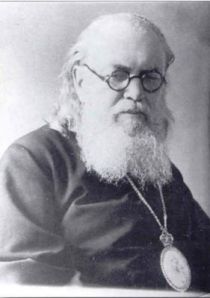
Gerontissa Nantieznta (Hope) of Sevastopol: a Spiritual Daughter of St. Luke of Simferopol


Below is an account by Father Nektarios Antonopoulos, the Abbot of the Holy Monastery of the Transfiguration of Christ - Sagmata, about his meetings with the Gerontissa (Eldress) Nantieznta on his trips to Simferopol. Fr. Nektarios has written a lot about St. Luke Archbishop of Simferopol, has helped the Monastery of Sagmata become a pilgrimage of St. Luke in Greece, and also has visited the Ukraine many times leading pilgrimages. These are some comments of his about a very spiritual nun who was and remains under the spiritual direction of St. Luke. The text is translated from: http://www.agiosloukas.org/nantienznta.html and http://www.agiosloukas.org/nantienznta1a.html.

"It was June 10th 2000, the eve of the celebration of St Luke the [Surgeon], Archbishop of Simferopol and Crimea. I was in the church of the Holy Trinity in Simferopol for the festival Vespers and Matins. Among the thousands of pilgrims I saw an elderly Great-schema nun.

From the first moment I was impressed with her presence and kindness. Her relatives related to me that Gerontissa was a spiritual child of St Luke. I saw her again the following year in Sevastopol. We talked a little more and I began to understand that this was a spiritual treasure, but unfortunately I was unable to stay longer. I bid her farewell, saying that if God wills, next year we will meet at her home.
It was Gerontissa Nantieznta (Hope) from Sevastopol. F

Indeed in June of 2002, I visited her residence on the ground floor of an old building. The small apartment consisted of a room connected by a narrow corridor to a small kitchen, small and unadorned [áíÞëéï êáé áðåñéðïßçôï?], in a terrible state, as well the rest of apartment. Gerontissa lives with her daughter and granddaughter. The wall above her bed was covered with icons, and in the center was a table with an ever-burning lapada [olive-oil votive lamp].

She welcomed us full of joy: «Welcome! What a great blessing this is, that you came to me the sinner...». She took a single orange from the table and gave it to me.


«I saved it for you.» She continued.

«You know a month ago I was very in very bad shape. I felt my forces starting to leave, my blood pressure fell, and I understood that I would soon be leaving for that Great Journey. The priest came and communed me, but at some point I remembered your words and what you told me when you left.

Then I entreated St. Luke and I told him: «My St. Luke, Fr. Nektarios said that in one month he would come to see me. If you want, let me live until then I can go. Indeed the Saint heard me, my strength returned, my blood pressure rose, and now I am well». I was surprised and somewhat uneasy to hear this, and I said: «But I also wanted to see you alive». Very charismatically she replied. «And I tried to live».


Icon of St. Luke Archbishop of Simferopol the Surgeon (taken from: http://www.agiosloukas.org/eikona-1.html)


I asked her about her life.
«I was born in 1906. I lived through a lot in my life. Poverty, hunger, misery, revolutions, wars...». It's noteworthy that Sevastopol belongs to those cities which have especially suffered. Shortly after the October Revolution, civil war erupted between «Whites» and «Reds», which took nearly four years. Millions were the dead and many more the other victims and the injured.


The most bloody phase of this war took place in the Crimea. Following the withdrawal of «Whites», the massacres reached their peak. Within one and a half months around 50,000 people were executed. Sevastopol lived through horrific days, and that is why we called the «City of the Hung». The central avenue was full of corpses. They gathered those that they had hung in the streets to terrorize the population, while the town was dominated by posters with the slogan «Death to traitors».

In the Second World War, Sevastopol once again sawthe horrors of war. The location is of strategic importance and the two rivals fought rabidly and had countless deaths. Sevastopol was kept for 249 days and all the while mercilessly bombed. When the fighting stopped, only seven buildings were left standing, the rest of the city had been steamrollered.

The Gerontissa continued: «Since early on we have experienced the horrors of civil war. I was a little girl and then our town lived through many misfortunes. There was a lot of blood spilled then. In the decade of the 1930s I got married and had two girls. Soon the Second World War erupted and my husband left for the front. The Germans arrested him as a prisoner and he was kept for some time in German camps.

After the war the prisoners returned, but not to their homes; they were sent to Siberia. It was an absurd policy of Stalin. Those miserable Russian prisoners who survived the suffering of the German camps, were considered by Stalin to be poisoned by the «miasma of capitalism» and therefore should be subjected to the «detoxification» anti-Capitalist treatment.
So in this way all the soldiers were driven to the gulag camps! I never saw my husband again. With great difficulty I raised my two children. My only consolation and hope was in faith in God. Since I was small I was in the church, and this supported me. Let His name be glorified».

Acquaintance with Saint Luke

I met Saint Luke in 1951 and this acquaintance was the greatest blessing of my life. For ten years I made him the prosphoro [holy bread] for the Divine Liturgy, and I never missed his sermons. Many times I visited his office, and we would talk frequently and often we ate together.

He helped us a lot, as long as the whole world. He often stayed hungry so that others could eat. But while St. Luke seemed austere, he actually wasn't. When you approaching him you saw a sweet man, full of love.

All of us loved him and we thought of him as our father. Although the situation was difficult - the Church was under persecution and we were at risk of losing our jobs - we ran to be close to him and to listen to the sermons. And when the Divine Liturgy was finished, we did not leave, but we waited for him and then followed him up to his house.
When we would reach his home, he turned around full of love and blessed us.

When my daughter was small, she had a problem with appendicitis and the doctors had recommended surgery. I went to St. Luke, he examined her and told us: «No, do not do surgery, there is nothing». Indeed, since then it did not bother her again.

I remember that I saw him a few days before his dormition. He was in his bed, very weak, and he couldn't speak well. He only whispered something to me and I received his blessing. I was present at his funeral. The two evenings when his body remained in the church I was there and I read the psalter. The second evening, as I read the psalter, I saw him in front of me, very much alive. He sat down not too far away at a table. I was speechless.


Photograph from the Funeral of St. Luke Archbishop of Simferopol (taken from: http://www.rel.gr/photo/thumbnails.php?album=59)

On the day of the funeral there was a great battle with the police, and we were not allowed either to bring the Relic along the main road or to sing. We will not forget the following amazing fact: When we were having the argument with the police over his coffin, there appeared in the sky thousands of doves which circled and chirped. Everyone followed St. Luke on the main road to the cemetery.

This took approximately three and a half hours. All this time we were chanting «Holy God...» and the doves followed us. When we arrived at the cemetery, the doves sat on the roof of the church. After we finished and started to leave, the doves flew away chirping, and no one ever saw them again. There were thousands of doves and this made a great impression. This was even striking to the «atheists».


All of his spiritual children were convinced that they were near a Saint. We had no doubt, and anything that we asked of in prayer us, he gave to us. Since then he has sometimes visited us. The last time he did I noticed that his robe had few sludges on it. I cleaned it and said said to him: «My Master, [Despota or Vladyka, the proper way to address to a hierarch] how did you get dirty? Next time, be more careful...»


The exhortation of Christ came to my mind, how we must become like children and admire their simplicity and directness.

The Tonsure
«I was tonsured in 1997. For a long time I wanted to become a nun, but was not provided with the opportunity. Eventually, my desire was made known to the Metropolitan, Lazarus, who gave me the blessing to be tonsured. I didn't go to a monastery, because there is none nearby. Furthermore I am very advanced in age, and so I decided to stay here. I split the room in the middle with my daughter (and showing me her bed and icons, she continued) from here is the monastery, and (showing the bed of her daughter across) there is the world.

My day passes with my prayer. What else should I do? I am a nun. Before, all day I would read many Paraklesis [Supplications services] and Xairetismoi [Salutations services] to the Panagia. Now I see almost nothing, nor do I hear well. My daughter reads to me, and the rest of the time I do the komposchoini [prayer rope]. I did the same at night, because I cannot sleep much. I pray: «Lord Jesus Christ, have mercy on me the sinner».


I pray to our Master for priests, for our monks and for the whole world. I also pray for you that God keeps you well.

She stopped for a moment and then continued: «You know, today I am very happy but also very sad. Tomorrow is the Ascension and our Christ will leave us. I am glad that he will ascend into the heavens, but again I am sorry that he leaves ... I wanted Him to stay!.


But whatever happens I will leave myself, I am now useless. I shouldn't weary them and pester them».


Some time past.

In October 2003 we visited again with a group of children from the Diocese of Thebes and Levadeia. The small room was packed, and most could not even fit in the room, but remained in the corridor. The Gerontissa's joy was very great «What a great joy you've given me. So many people came to me! Thank you for remembering me. You came to me like little birds from heaven, like angels».

Among the other incidents mentioned, the following two stories show what a great heart Gerontissa has. «A few years ago went with my daughter to church. On the road we found a small, destitute [ñáêÝíäõôï?] child. We asked him where he was from and where he was staying. The child was abandoned, and he had neither parents nor home. I told him: «Do you want to come to stay with us?»

He accepted, and so we took the boy home and kept him for three to four years. Later, some relatives of his from Vynitsa were found from very far from here, and they took the child with them.


Unfortunately now we have no contact with the child. They didn't take our phone number and haven't sent us a letter. Never mind, may things go well with the child, as God keeps him well. We could do this and we did».


We admired her nobility. The soul which knows how to love, to offer and to sacrifice does not complain for any ingratitude, or require any permanent dependency from others [ïýôå áðáéôåß ôçí ìüíéìç åîÜñôçóç ôïõ Üëëïõ?].

The second incident is similar.

«One relative of ours was pregnant. Because stumbled financially, she decided to have an abortion.

We entreated her not to do so. She was adamant. She said that she would not be able to raise it. I fell to her feet, and I begged her with tears, saying that she would be committing a crime, she would be killing a human being. She did not change her mind, and then I said that since she could not raise it, she should give it to me, I will adopt it and will raise it. This convinced her. The child was born and we brought her home. Today she is 14 years old».


She appears to be a very good and willing girl, who lives as a gift of the love of her holy grandmother. The remarkable thing is that Gerontissa Nantieznta is not only not rich, but gets a pension of hunger [ðáßñíåé óýíôáîç ðåßíáò, government subsidy for food?]. Only six euro per month and a similar amount from her daughter.
Thus little Anna grew up in Gerontissa's house.

The money is not enough to live, but the Gerontissa is totally devoted [áðüëõôá ðáñáäïìÝíç?] to the will of God.
We sat close to her for over an hour. Her smile was constant on her lips and her words were an outpouring of joy. We did not hear any complaints, only glorification of God. Her countenance was filled with love and kindness.


Her eyes could see little, but the eyes of her soul were wide open. In her hands continuously spun the komposchoini and every so often she would whisper the Jesus Prayer [«Lord Jesus Christ, have mercy on me the sinner»].

As we were leaving she filled us with prayers: «Go in prayer of God and the Panagia. May your guardian angel be with you. May St. Luke be near you. Write me your names and your city, that I may pray for all of you and your families. Now that you are leaving, I will do the Paraklesis to the Panagia Odigitria ["The Directress"] that she might guide you, and go on the road before you».


Icon of Panagia and Christ "Odigitria" ("The Directress") (Icon courtesy of www.eikonografos.com used with permission)

...She asked her daughter to help her outside to bid us farewell. She sat at the door and with tears in her eyes she crossed us and continued prayers. «May your guardian angel be with you. May Panagia the Odigitria be your guide».

One hour near her was a taste of Paradise."

(taken from: http://www.agiosloukas.org/nantienznta.html, and http://www.agiosloukas.org/nantienznta1a.html; for more info on St. Luke the Surgeon, Archbishop of Simferopol, see: http://full-of-grace-and-truth.blogspot.com/2008/10/st-luke-archbishop-of-simferopol.html)

St. Luke Archbishop of Simferopol, intercede for us all and help us!
Most-Holy Theotokos, save us!

Sunday, May 29, 2011

Elder Paisios of Athos


Douglas Cramer: The Saint Is The Only True Revolutionary

The siren song of our culture is that we should devote our best energies to serve ourselves and see to our own needs before thinking of others. We should avoid entangling ourselves in commitments, relationships and groups that might make demands of us. The great invitation of the Church, which calls us to join with the visible Body of Christ in this world, is a radical invitation. It is a revolutionary alternative to the extreme individualism of our culture.

Sadly, this cult of individualism is not restricted only to unbelievers. Many people who consider themselves Christian have signed on as well. There is a book out by a well-known religious writer named George Barna, titled Revolution. Barna identifies a growing trend among Christians, a movement that centers on a rejection of community and an embrace of individualism. Many of our neighbors have come to believe that the best way to live a Christian life is in isolation from any parish or church, figuring out for themselves how they should pray, act, and understand their faith.

“There is a new breed of Christ-follower in America today,” Barna says, “These are people who are more interested in being the Church than in going to church.” His research has “discovered and described a growing national population of more than twenty million adults who are committed to living their faith and making God the top priority in their life. Some are doing so through the ministries of a local church, but many are not. The emphasis is upon allowing God to transform them in every aspect of their life.”

Now, what is wrong with this? Don’t we all believe that we should allow God to transform us in every aspect of our lives? Of course we do. The problem is that these Christ-followers, perhaps with the best of intentions, have asked a false question, set up a false choice. As Orthodox Christians, we understand that we cannot choose between “being the Church” and “going to church.” The Church is not only an invisible, mystical union. It is a physical body of believers, who are bound together as a holy community in communion with God and His saints.

While this trend saddens me, it does not surprise me. The temptation of individualism has a long history, and as we know it is supported in countless ways by our culture. But the true calling of Christ and His Church offers us a very different path.

There is a Greek word that contains the essence of this truth. That word is koinonia. Koinonia means community, in its most profound and mysterious sense, and it is in community that we find the truth of who we are and how we should live. It is in God’s community, in koinonia, that we find our life as persons.

Orthodox Christianity offers us an alternative to the isolation of individualism – it offers us true personhood. What does this mean? What is the difference between individualism and personhood? The great Orthodox teacher Bishop Kallistos Ware gives us an eloquent answer: “The human person is created for relationship.” True personhood is not found in individuals – it is found in community.

At the heart of this teaching is our affirmation that we are created in the image of God. And as Christians, we proclaim that when we say “God,” we mean the Holy Trinity: Father, Son, and Holy Spirit. We understand that God Himself is not in isolation. “God is love,” we read in 1 John 4:8. God is love because God Himself is community. Bishop Kallistos goes on to say, “God is not a unit, but a union. God is love in the sense of shared love, the mutual love of three Persons in one. God is shared love, not self-love. God is openness, exchange, solidarity, self-giving.”

Brothers and sisters, we can only truly understand ourselves, we can only lay claim to the image of God within us, when we recognize that like God the truth of our identities are centered in community. The truth of our very nature demands that we fully embrace our relationships with others. This is the key to personhood according to the Trinitarian image. Not isolated self-awareness, but relationship in mutual love.

Remember the words of Christ in His prayer to the Father at the Last Supper: “That they all may be one, as you, Father, are in Me, and I in You; that they also may be one in Us.” The mutual love of the Holy Trinity is the model for our human personhood. We are here on earth to reproduce within time the love that passes in eternity between Father, Son, and Holy Spirit.

How different this understanding of life is from the thin gruel offered by the cult of individualism. But still, we all feel the call of selfishness, of putting ourselves first. This shouldn’t surprise us. Like I said, the temptation of individualism has a long history—in fact, it goes all the way back to our beginnings. The essence of the fall of Adam and Eve in Paradise was the rejection of relationship. When God asked Adam if he had eaten the fruit of the tree, what did he say? “The woman whom you gave to be with me, she gave me of the tree, and I ate.” And what did Eve say? “The serpent deceived me, and I ate.” Adam and Eve each chose to think only of themselves, of their own needs. They each chose selfishly, and sought to place the blame for their act on someone else.

But we have received a different invitation. God is asking us to join with others, and with himself, in holy fellowship—to come alongside our fellow believers and dedicate ourselves to training in the life of Christ.

Of course, there is one great challenge in living as part of a community. Can you guess what it is? That’s right—other people! Why is it so tempting for us to isolate ourselves, to avoid church, to want to flee from any relationship that might make demands on us? Because when we become involved with others, we will be hurt. There’s no getting away from it. Relationship means pain. It means people will hurt us, and we will hurt them. 

C. S. Lewis put it well:
To love at all is to be vulnerable. Love anything, and your heart will certainly be wrung and possibly be broken. If you want to make sure of keeping it intact, you must give your heart to no one, not even to an animal. Wrap it carefully round with hobbies and little luxuries; avoid all entanglements; lock it up safe in the casket or coffin of your selfishness. But in that casket – safe, dark, motionless, airless – it will change. It will not be broken; it will become unbreakable, impenetrable, irredeemable. The alternative to tragedy, or at least to the risk of tragedy, is damnation. The only place outside Heaven where you can be perfectly safe from all the dangers of love is Hell.


If you believe you can protect yourself from pain by holding back, by not engaging with others, you are lying to yourself. We must engage, we must commit, we must come together. We must love. And we will all suffer for it, and cause suffering to others. If you want to live, there is no other way.

We can begin by getting anything that might hinder this bonding out in the open. Forgiveness isn’t just about saying the words, or going through the motions. And it isn’t about excusing or justifying someone’s actions, pretending that they didn’t really cause you pain. True forgiveness means recognizing that someone has sinned against you, and choosing to love that person anyway.

This is our goal – bringing about the breakthrough of the Kingdom of Heaven in to our world. This is what God is calling you to be part of. This is why He wants you to choose to be part of His Church, of this holy community. Remember the saying: “The only thing we can do alone is go to hell.” But together, we can transform our lives by transforming our relationships. We can become more than individuals – we can become true persons in the image of God. We can become saints. Fr. Alexander Schmemann once said, “The saint is the only true revolutionary in this world.”
This reflection is adapted from a speech originally written for Fr. Christopher Metropulos of St. Demetrios Greek Orthodox Cathedral of Ft. Lauderdale, FL, and SCOBA's Orthodox Christian Network. Learn more about the powerful ministries of OCN on their website, www.myocn.net.

Sunday of the Blind Man

The Lord Jesus was coming from the Temple on the Sabbath, when, while walking in the way, He saw the blind man mentioned in today's Gospel. This man had been born thus from his mother's womb, that is, he had been born without eyes (see Saint John Chrysostom, Homily LVI on Matthew; Saint Irenaeus, Against Heresies, Book V:15; and the second Exorcism of Saint Basil the Great). When the disciples saw this, they asked their Teacher, "Who did sin, this man, or his parents, that he was born blind?" They asked this because when the Lord had healed the paralytic at the Sheep's Pool, He had told him, "Sin no more, lest a worse thing come unto thee" (John 5:14); so they wondered, if sickness was caused by sin, what sin could have been the cause of his being born without eyes. But the Lord answered that this was for the glory of God. Then the God-man spat on the ground and made clay with the spittle. He anointed the eyes of the blind man and said to him, "Go, wash in the Pool of Siloam." Siloam (which means "sent") was a well-known spring in Jerusalem used by the inhabitants for its waters, which flowed to the eastern side of the city and collected in a large pool called "the Pool of Siloam."
Therefore, the Saviour sent the blind man to this pool that he might wash his eyes, which had been anointed with the clay-not that the pool's water had such power, but that the faith and obedience of the one sent might be made manifest, and that the miracle might become more remarkable and known to all, and leave no room for doubt. Thus, the blind man believed in Jesus' words, obeyed His command, went and washed himself, and returned, no longer blind, but having eyes and seeing. This was the greatest miracle that our Lord had yet worked; as the man healed of his blindness himself testified, "Since time began, never was it heard that any man opened the eyes of one that was born blind," although the Lord had already healed the blind eyes of many. Because he now had eyes, some even doubted that he was the same person (John 9:8-9); and it was still lively in their remembrance when Christ came to the tomb of Lazarus, for they said, "Could not this man, who opened the eyes of the blind man, have caused that even this man should not have died?" Saint John Chrysostom gives a thorough and brilliant exposition of our Lord's meeting with the woman of Samaria, the healing of the paralytic, and the miracle of the blind man in his commentaries on the Gospel of Saint John.
Kontakion in the Fourth Tone
I come to You, O Christ, as the man blind from birth. With the eyes of my soul blinded, I cry out to You in repentance, "You are the resplendent Light of those in darkness.


Sunday, May 22, 2011

St Luke of Crimea, Non-mercenary Doctor


On Science and Religion

By St. Luke, Archbishop of Crimea


       “When we examine contemporary science as developed by scientists such as Lamark and Darwin, we see the antithesis and I would say the complete disagreement that exists between science and religion, on topics that concern the more basic problems of existence and knowledge. For this, an enlightened mind cannot accept at the same time both one and the other and must chose between religion and science”.
       A well known German Zoologist, Ernst Haeckel (1834-1919), who was a good follower of Darwin, wrote these words some 65 years ago, in his book, “The Riddle of the Universe” that was very successful and as it seemed, had proved that faith is absurd. So says Haeckel that every enlightened man must chose between science and religion and should follow either one or the other. He considered it necessary that such men should deny religion because a logical man cannot deny science.
       Truly, is this necessary? No, not at all, for we know that many and great scientists were at the same time great believers. For example, such was the Polish astronomer Copernicus who laid the foundation of all contemporary astronomy. Copernicus was not only a believer but was also a cleric. Another great scientist, Newton, whenever he mentioned the word God, he removed his hat. He was a great believer. A great bacteriologist of our time and almost a contemporary, Pasteur, who laid the basis of contemporary bacteriology, he would start every scientific work with a prayer to God. Some 10 years ago a great scientist passed away, who was our countryman, physiologist Pavlov, who was the creator of the new physiology of the brain. He too was a great believer. Would Haeckel therefore dare say that these men did not have enlightened mind because they believed in God?  
       So what happens now? Why even today there are some scientists, professors at Universities whom I personally know and are great believers.  Why don’t all the scientists deny religion but only those who think the same as Haeckel? Because these people believe only in materials and deny the spiritual world, they do not believe in the after death life, they do not accept the immortality of the soul and of course they do not accept the resurrection of the dead. They say that science is capable of everything, that there is no secret in nature that science cannot discover. What can we answer to these?
       We shall respond to them this way. You are totally right. We cannot limit the human mind that searches nature. We know that today, science knows only a part of the things we have of nature. We also understand that the possibilities of science are great. In this they are right and we don’t doubt it. What then do we doubt? Why don’t we deny religion like them and consider it contrary to scientific knowledge?
       Just because we believe wholeheartedly that there is a spiritual world. We are certain that apart from the material world there is an infinite and incomparably superior spiritual world. We believe in the existence of spiritual beings that have higher intellect than us humans. We believe wholeheartedly that above this spiritual and material world there is the Great and Almighty God.
       What we doubt is the right of science to research with its methods the spiritual world. Because the spiritual world cannot be researched with the methods used to research the material world. Such methods are totally inappropriate to research the spiritual world.
       How do we know that there is a spiritual world? Who told us that it exists? If we are asked by people who do not believe in the Divine revelation, we shall answer them thus: “Our heart told us”. For there are two ways for one to know something, the first is that which is spoken by Haeckel, which is used by science to learn of the material world. There is however another way that is unknown to science, and does not wish to know it. It is the knowledge through the heart. Our heart is not only the central organ of the circulation system, it is an organ with which we know the other world and receive the highest knowledge. It is the organ that gives us the capability to communicate with God and the above world. Only in this we disagree with science.
       Praising the great successes and achievements of science, we do not doubt at all its great importance and we do not confine the scientific knowledge. We only tell the scientists “You do not have the capability with your methods to research the spiritual world, we however can with our heart
        There are many unexplainable phenomena which concern the spiritual world that are real (as are some type of material phenomena). There are therefore phenomena that science will never be able to explain because it does not use the appropriate methods.
       Let science explain how the prophecies appeared on the coming of the Messiah, which were all fulfilled. Could science tell us how the great prophet Isaiah, some 700 years before the birth of Christ, foretold the most important events in His life and for which he was named the evangelist of the Old Testament? To explain the far sighted grace possessed by the saints and to tell us with which physical methods the saints inherited this grace and how they could understand the heart and read the thoughts of a person they had just met for the first time? They would see a person for the first time and they will call him by his name. Without waiting for the visitor to ask, they would answer on what troubled him.
       If they can, let them explain it to us. Let them explain with what method the saints foretold the great historical events which were accurately fulfilled as they were prophesied. Let them explain the visitation from the other world and the appearance of the dead to the living.
       They shall never explain it to us because they are too far from the basis of religion- from faith. If you read the books of the scientists who try to reconstruct religion, you will see how superficially they look at things. They do not understand the essence of religion yet they criticize it. Their criticism does not touch the essence of faith, since they are unable to understand the types, the expressions of religious feeling. The essence of religion they do not understand. Why not? Because the Lord Jesus Christ says “No one can come to me unless My Father who sent Me draws him to Me.(John 6:44)
       So it is necessary that we be drawn by the Heavenly Father, it is necessary that the grace of the Holy Spirit enlighten our heart and our mind. To dwell in our heart and mind through this enlightenment, the Holy Spirit and the ones who were found worthy to receive the gift of the Holy Spirit, those in whose heart lives Christ and His Father, know the essence of faith. The others, outside the faith cannot understand anything.
       Let us hear the criticism against Haeckel from a French philosopher Emile Boutroux (1845-1921). So says Boutroux, “The criticisms of Haeckel concern much more the ways, than the essence, which (the ways) he observes with such a materialistic and narrow view, that they cannot be accepted by religious people. Thus the criticism of religion by Haeckel is not referred to, not even in one of the principles that constitutes religion”.
       This is therefore our opinion regarding Haeckel’s book “The Riddle of the Universe” which up to day is considered the “Bible” for all those who criticize religion, which they deny and find it contrary to science. Do you see how poor and tasteless arguments they use? Don’t become scandalized when you hear what they say about religion, since they themselves cannot understand its essence. You people, who may not have much of a relationship with science and do not know much about philosophy, remember always the most basic beginning, which was well known by the early Christians. They considered poor, the person who knew all the sciences yet he knew not God. On the other hand, they considered blessed the person who knew God, even if he knew absolutely nothing about the worldly things.
       Guard this truth like the best treasure of the heart, walk straight without looking right or left. Let us not bother with what we hear against religion, losing our bearings. Let us hold on to our faith which is the eternal indisputable truth. Amen.  

St Luke, Archbishop of Crimea,
Topics and Discussions,

“Orthodox Kypseli” Publications- Thessaloniki  
St Luke 2

St. Luke Life

St. Luke was born Valentine of Felix Voino-Yassenetsky in Kertz on April 27th 1877. His mother was Orthodox, but later did not attend church, while his father, a Roman Catholic, was deeply pious and influenced Valentine very much. His faith was much influenced by both his proximity to the Holy Lavra of the Kiev Caves (which his family lived near) and a copy of the Holy Bible he received upon graduating High School. He had a great talent for and desire to pursue art, however, his desire to do something to help the poor peasants around him was overriding, and he attended medical school in Kiev, and graduated in 1903.
+
In 1904, the Russo-Japanese War brought Valentine to the Far East as a surgeon, where he met his future wife Anna Vasilievna Lanskaya. They married and had four children. During this time, as a surgeon, Valentine became specially trained in opthamological operations, along with regional anesthesia and the surgery of pyogenic infections (which later became areas of research for him). He also displayed immense faith in those difficult times. The family would entertain a nun from the Fiodorovski monastery once a month, and they would attending church regularly. Valentine also refused to perform an operation without first praying before an icon of the Theotokos in the operating room, and then signing the patient with iodine in the sign of the Cross. In fact, one time the Communist Party officials removed the icon, at which point Valentine refused to return to surgery until it would be returned. Soon, the wife of one of the party officials needed an operation, and specifically requested Valentine. He, however, refused to perform the surgery until the icon of the Panagia was returned. They complied with his request, and he returned to surgery.
+
Valentine’s wife, who came down with tuberculosis, died prematurely. Though Valentine grieved deeply for his wife, he was able to see the hand of the Lord guiding him even through this difficult time, both by Him choosing one of the nurses to help raise his children, and by calling him to the priesthood. In obedience to Archbishop Innocent, Valentine hastily followed Christ’s divine call, and was ordained a deacon on January 26th, and a priest on February 2nd, 1921. In fact, because of the need for a bishop, Fr. Valentine also obeyed the call of the people and underwent the monastic tonsure (being given the name “Luke”, as he resembled the Evangelist in many ways) and was consecrated a bishop.
+
This period of time was extremely difficult for the Russian Orthodox Church, as they were constantely being assulted from the right (zealots and schismatics) and from the left (the athiest government and their heretical “Living Church”). Because of St. Luke’s confessions of faith (and despite his immense medical and scientific achievements), he was imprisoned, tortured, and exiled for 11 years in total, to Siberia, and other trecherous locales. Besides persecution from the government, he had to deal with heretics from the “Living Church” who masqueraded as Orthodoxy and drew people away from the Church, and schismatic individuals who also caused unneeded harm in those turbulent years.
+
St. Luke’s virtues, struggles and achievements are staggering. As a Grace-filled hierarch of the Church, he re-opening many churches that had been closed by the Communists, produced deep theologic works, and supported the faithful while drawing many to Orthodoxy. In addition, his love, skill and devotion to his patients saved thousands, (especially injured soldiers in war), and his research techniques were award-winning, and were thought to still be recognized by his fellow surgeons fifty years later. After a lifetime of such medical accomplishments and spiritual struggles in his confession for the Faith, St. Luke reposed in the Lord as the Archbishop of Simferopol (Crimea) on June 11th (New Calendar) 1961.
+
St. Luke’s incredible virtues, love for the Lord and his fellow men, and accomplishments helped sustain the faithful immensely in those difficult days of the Atheist state. After his death, the Communist Party sought to use propaganda and intimidation to minimize his achievements, but the overwhelming love and devotion of the faithful thwarted their plans. Whereas the funeral procession was supposed to last a few minutes without psalmody or honor, it ended up lasting hours, as the faithful planted themselves around the hurse, and did not let it speed away to the cemetary. Miraculously, a huge flock of doves followed the procession from the church to the cemetary.
+
Later, the remains of St. Luke were disinterred, and it was found that his heart remained incorrupt. What a beautiful reminder of the never-ending love that he showed towards Christ and towards his fellow men, especially the sick and suffering! In November of 1995, he was proclaimed a Saint by the Ukranian Orthodox Church.
+
Besides being beloved in Russia and the Ukraine, St. Luke is also very well-loved in Greece. Specifically, the life of St. Luke, written by Archimandrite and Abbott of the Monastery of Sagmata, Nektarios Antonopoulos, has sold thousands of copies, and is in its 14th edition of printing. Many churches (some of them quite large) have been built in honor of St. Luke of Simferopol in Greece alone in recent years. The Monastery of Sagmata (outside of the city of Thebes in Greece) also houses relics of St. Luke, which there and everywhere continue to work many, many miracles through his intercessions.
+
One incredible miracle involved a young boy who was an excellent piano player. The tips of three of his fingers were cut off accidentally, and he was afraid that he would never be able to play piano again. After he and his grandmother prayed to St. Luke to help him, his fingers began to spontaneously regrow, and in 10 days, were totally normal! Today, the boy plays better with that hand than his other, unaffected hand.
+
May St. Luke, the great defender of Orthodoxy in these latter days, the wondrous healer of souls and bodies, the teacher, the hierarch, and the holy father, intercede with Christ for all of us! Amen!


The Saint’s last words

“My children, very much do I entreat you,
Arm yourselves with the armor that God gives, That you may withstand the devil’s tricks.
You can’t imagine how evil he is.
We don’t have to fight with people but with rulers and powers, in effect the evil spirits.
Take care!
It’s no use to the devil for anyone to think and feel
that he is close to him.
A hidden and unknown enemy is more dangerous than a visible enemy.
O how large and terrible is the army of the demons.
How numberless is their black horde!
Unchanged, untiring, day and night, seeking to push all of us who believe
in the name of Christ, to lure us on the road of unbelief, of evil and of impiety.
These unseen enemies of God have made their sole purpose, day and night to seek our destruction.

Friday, May 20, 2011

Saints Constantine and Helen Equal-To-The-Apostles


Reading:

This great and renowned sovereign of the Christians was the son of Constantius Chlorus (the ruler of the westernmost parts of the Roman empire), and of the blessed Helen. He was born in 272, in (according to some authorities) Naissus of Dardania, a city on the Hellespont. In 306, when his father died, he was proclaimed successor to his throne. In 312, on learning that Maxentius and Maximinus had joined forces against him, he marched into Italy, where, while at the head of his troops, he saw in the sky after midday, beneath the sun, a radiant pillar in the form of a cross with the words: "By this shalt thou conquer." The following night, our Lord Jesus Christ appeared to him in a dream and declared to him the power of the Cross and its significance. When he arose in the morning, he immediately ordered that a labarum be made (which is a banner or standard of victory over the enemy) in the form of a cross, and he inscribed on it the Name of Jesus Christ. On the 28th Of October, he attacked and mightily conquered Maxentius, who drowned in the Tiber River while fleeing. The following day, Constantine entered Rome in triumph and was proclaimed Emperor of the West by the Senate, while Licinius, his brother-in-law, ruled in the East. But out of malice, Licinius later persecuted the Christians. Constantine fought him once and again, and utterly destroyed him in 324, and in this manner he became monarch over the West and the East. Under him and because of him all the persecutions against the Church ceased. Christianity triumphed and idolatry was overthrown. In 325 he gathered the First Ecumenical Council in Nicaea, which he himself personally addressed. In 324, in the ancient city of Byzantium, he laid the foundations of the new capital of his realm, and solemnly inaugurated it on May 11, 330, naming it after himself, Constantinople. Since the throne of the imperial rule was transferred thither from Rome, it was named New Rome, the inhabitants of its domain were called Romans, and it was considered the continuation of the Roman Empire. Falling ill near Nicomedia, he requested to receive divine Baptism, according to Eusebius (The Life of Constantine. Book IV, 61-62), and also according to Socrates and Sozomen; and when he had been deemed worthy of the Holy Mysteries, he reposed in 337, on May 21 or 22, the day of Pentecost, having lived sixty-five years, of which he ruled for thirty-one years. His remains were transferred to Constantinople and were deposed in the Church of the Holy Apostles, which had been built by him (see Homily XXVI on Second Corinthians by Saint John Chrysostom).

As for his holy mother Helen, after her son had made the Faith of Christ triumphant throughout the Roman Empire, she undertook a journey to Jerusalem and found the Holy Cross on which our Lord was crucified (see Sept. 13 and 14). After this, Saint Helen, in her zeal to glorify Christ, erected churches in Jerusalem at the sites of the Crucifixion and Resurrection, in Bethlehem at the cave where our Saviour was born, another on the Mount of Olives whence He ascended into Heaven, and many others throughout the Holy Land, Cyprus, and elsewhere. She was proclaimed Augusta, her image was stamped upon golden coins, and two cities were named Helenopolis after her in Bithynia and in Palestine. Having been thus glorified for her piety, she departed to the Lord being about eighty years of age, according to some in the year 330, according to others, in 336.

Apolytikion in the Plagal of the Fourth Tone

Having seen the image of Thy Cross in Heaven, and like Paul, having received the call not from men, Thine apostle among kings entrusted the commonwealth to Thy hand, O Lord. Keep us always in peace, by the intercessions of the Theotokos, O only Friend of man.

Kontakion in the Third Tone

Today, Constantine with his mother Helen present the Cross, the most precious wood. It shames unbelievers. It is a weapon of faithful kings against their adversaries. A great sign has come forth for us which is awesome in battle.

Source: http://www.goarch.org/chapel/saints_view?contentid=62

Thursday, May 19, 2011

The Story of Saint Vladimir the Great’s Search for the True Religion

The Story of Saint Vladimir the Great’s Search for the True Religion

St. Vladimir the Great
In the year 987, Vladimir summoned together his boyars and the city elders and said to them, “The Bulgars [Muslims] came before me urging me to accept their religion. Then came the Germans [Latin Christians] and praised their own faith; and after them came the Jews. Finally the Greeks [Orthodox Christians] appeared, criticizing all other faiths but commending their own. What is your opinion on this subject, and what do you answer?” The boyars and elders replied, “You have your men at your disposal. Send them to enquire about the ritual of each and how they worship God.”
Their counsel pleased the prince and all the people, so that they chose good and wise men to the number of ten. Then they went their way.
When they returned, Vladimir called together his boyars and elders and commanded the envoys to speak out, and so they did, saying: “Among the Bulgars [Muslims], we beheld how they worship in their temple, called a mosque, while they stand ungirt. The Bulgar bows, sits down, looks hither and thither like one possessed, and there is no joy among them, but only sorrow. Their religion is not good.  Then we went among the Germans [Latin Christians], and saw them performing many ceremonies in their temples; but we beheld no beauty there.
Then we went to Byzantium, and the Greeks [Orthodox Christians] led us to the places where they worship their God, and we knew not whether we were in heaven or on earth. For on earth there is no such splendour or such beauty, and we are at a loss how to describe it. We only know that God dwells there among men, and their service is fairer than the ceremonies of other nations. For we cannot forget that beauty.
* This excerpt is from “The Russian Chronicles: A Thousand Years that Changed the World”

Sunday, May 15, 2011

Fr Seraphim Rose on Receiving Truth


Why is the truth, it would seem, revealed to some and not to others? Is there a special organ for receiving revelation from God? Yes, though usually we close it and do not let it open up: God’s revelation is given to something called a loving heart.


Source: http://solzemli.wordpress.com/2011/05/14/fr-seraphim-rose-on-receiving-truth/

Thursday, April 28, 2011

The Orthodox Church: An Introduction by Metropolitan Kallistos Ware


The Orthodox Church was founded by our Lord Jesus Christ and is the living manifestation of His presence in the history of the mankind. The most conspicuous characteristics of Orthodoxy are its rich liturgical life and its faithfulness to the apostolic tradition. It is believed by Orthodox Christians that their Church has preserved the tradition and continuity of the ancient Church in its fullness compared to other Christian denominations which have departed from the common tradition of the Church of the first 10 centuries. Today Orthodox Church numbers approximately 300 million Christians who follow the faith and practices that were defined by the first seven ecumenical councils. The word orthodox ("right belief and right glory") has traditionally been used, in the Greek-speaking Christian world, to designate communities, or individuals, who preserved the true faith (as defined by those councils), as opposed to those who were declared heretical. The official designation of the church in its liturgical and canonical texts is "the Orthodox Catholic Church" (gr. catholicos = universal).

The Orthodox Church is a family of "autocephalous" (self governing) churches, with the Ecumenical (= universal) Patriarch of Constantinople holding titular or honorary primacy as primus inter pares (the first among equals). The Orthodox Church is not a centralized organization headed by a pontiff. The unity of the Church is rather manifested in common faith and communion in the sacraments and no one but Christ himself is the real head of the Church. The number of autocephalous churches has varied in history. Today there are many: the Church of Constantinople (Istanbul), the Church of Alexandria (Egypt), the Church of Antioch (with headquarters in Damascus, Syria), and the Churches of Jerusalem, Russia, Serbia, Romania, Bulgaria, Georgia, Cyprus, Greece, Poland, Albania and America
There are also "autonomous" churches (retaining a token canonical dependence upon a mother see) in Czech and Slovak republic, Sinai, Crete, Finland, Japan, China and Ukraine. In addition there is also a large Orthodox Diaspora scattered all over the world and administratively divided among various jurisdictions (dependencies of the above mentioned autocephalous churches). The first nine autocephalous churches are headed by patriarchs, the others by archbishops or metropolitans. These titles are strictly honorary as all bishops are completely equal in the power granted to them by the Holy Spirit.
The order of precedence in which the autocephalous churches are listed does not reflect their actual influence or numerical importance. The Patriarchates of Constantinople, Alexandria, and Antioch, for example, present only shadows of their past glory. Yet there remains a consensus that Constantinople's primacy of honor, recognized by the ancient canons because it was the capital of the ancient Byzantine empire, should remain as a symbol and tool of church unity and cooperation. Modern pan-Orthodox conferences were thus convoked by the ecumenical patriarch of Constantinople. Several of the autocephalous churches are de facto national churches, by far the largest being the Russian Church; however, it is not the criterion of nationality but rather the territorial principle that is the norm of organization in the Orthodox Church.
In the wider theological sense "Orthodoxy is not merely a type of purely earthly organization which is headed by patriarchs, bishops and priests who hold the ministry in the Church which officially is called "Orthodox." Orthodoxy is the mystical "Body of Christ," the Head of which is Christ Himself (see Eph. 1:22-23 and Col. 1:18, 24 et seq.), and its composition includes not only priests but all who truly believe in Christ, who have entered in a lawful way through Holy Baptism into the Church He founded, those living upon the earth and those who have died in the Faith and in piety."
The Great Schism between the Eastern and the Western Church (1054) was the culmination of a gradual process of estrangement between the east and west that began in the first centuries of the Christian Era and continued through the Middle Ages. Linguistic and cultural differences, as well as political events, contributed to the estrangement. From the 4th to the 11th century, Constantinople, the center of Eastern Christianity, was also the capital of the Eastern Roman, or Byzantine, Empire, while Rome, after the barbarian invasions, fell under the influence of the Holy Roman Empire of the West, a political rival. In the West theology remained under the influence of St. Augustine of Hippo (354-430) and gradually lost its immediate contact with the rich theological tradition of the Christian East. In the same time the Roman See was almost completely overtaken by Franks. Theological differences could have probably been settled if there were not two different concepts of church authority. The growth of Roman primacy, based on the concept of the apostolic origin of the Church of Rome which claimed not only titular but also jurisdictional authority above other churches, was incompatible with the traditional Orthodox ecclesiology. The Eastern Christians considered all churches as sister churches and understood the primacy of the Roman bishop only as primus inter pares among his brother bishops. For the East, the highest authority in settling doctrinal disputes could by no means be the authority of a single Church or a single bishop but an Ecumenical Council of all sister churches. In the course of time the Church of Rome adopted various wrong teachings which were not based in the Tradition and finally proclaimed the teaching of the Pope's infallibility when teaching ex cathedra. This widened the gap even more between the Christian East and West. The Protestant communities which split from Rome in the course of centuries diverged even more from the teaching of the Holy Fathers and the Holy Ecumenical Councils. Due to these serious dogmatic differences the Orthodox Church is not in communion with the Roman Catholic and Protestant communities. More traditional Orthodox theologians do not recognize the ecclesial and salvific character of these Western churches at all, while the more liberal ones accept that the Holy Spirit acts to a certain degree within these communities although they do not possess the fullness of grace and spiritual gifts like the Orthodox Church. Many serious Orthodox theologians are of the opinion that between Orthodoxy and heterodox confessions, especially in the sphere of spiritual experience, the understanding of God and salvation, there exists an ontological difference which cannot be simply ascribed to cultural and intellectual estrangement of the East and West but is a direct consequence of a gradual abandonment of the sacred tradition by heterodox Christians.
At the time of the Schism of 1054 between Rome and Constantinople, the membership of the Eastern Orthodox Church was spread throughout the Middle East, the Balkans, and Russia, with its center in Constantinople, the capital of the Byzantine Empire, which was also called New Rome. The vicissitudes of history have greatly modified the internal structures of the Orthodox Church, but, even today, the bulk of its members live in the same geographic areas. Missionary expansion toward Asia and emigration toward the West, however, have helped to maintain the importance of Orthodoxy worldwide. Today, the Orthodox Church is present almost everywhere in the world and is bearing witness of true, apostolic and patristic tradition to all peoples.
The Orthodox Church is well known for its developed monasticism. The uninterrupted monastic tradition of Orthodox Christianity can be traced from the Egyptian desert monasteries of the 3rd and 4th centuries. Soon monasticism had spread all over the Mediterranean basin and Europe: in Palestine, Syria, Cappadocia, Gaul, Ireland, Italy, Greece and Slavic countries. Monasticism has always been a beacon of Orthodoxy and has made and continues to make a strong and lasting impact on Orthodox spirituality.
The Orthodox Church today is an invaluable treasury of the rich liturgical tradition handed down from the earliest centuries of Christianity. The sense of the sacred, the beauty and grandeur of the Orthodox Divine Liturgy make the presence of heaven on earth live and intensive. Orthodox Church art and music has a very functional role in the liturgical life and helps even the bodily senses to feel the spiritual grandeur of the Lord's mysteries. Orthodox icons are not simply beautiful works of art which have certain aesthetic and didactic functions. They are primarily the means through which we experience the reality of the Heavenly Kingdom on earth. The holy icons enshrine the immeasurable depth of the mystery of Christ's incarnation in defense of which thousands of martyrs sacrificed their lives.